- MVP Templates
- Posts
- Your First 5 Hires Will Make Or Break You
Your First 5 Hires Will Make Or Break You
Most founders treat their first 5 hires like every other hire that comes after.

Branden Coluccio
May 08, 2026
In partnership with

Most founders treat their first 5 hires like every other hire that comes after.
Same job descriptions. Same interview process. Same focus on resumes and experience. They post the role, screen candidates, run them through a few interviews, and pick whoever seems best.
This is a massive mistake.
Your first 5 hires aren't just employees. They're the foundation of everything that comes next. They set the culture. They define the pace. They establish what "good" looks like at your company. And they multiply themselves, because every future hire will be evaluated against the standard these 5 set.
Get this wrong and you spend years cleaning up. Get it right and you build something that compounds for the rest of your company's life.
Here's what nobody teaches you about hiring at the earliest stage.
Why Your First 5 Matter More Than Your Next 50
When you hire person #100, they slot into an existing system. There's already a culture. There are already standards. There are already processes. Person #100 adapts to your company.
When you hire person #1, there is no system. There is no culture. There is no standard. Person #1 IS the system. Person #1 IS the culture.
Whoever you hire early becomes the template. If your first engineer ships fast and dirty, that becomes "how we ship." If your first salesperson is aggressive and pushy, that becomes "how we sell." If your first hire is mediocre, mediocre becomes acceptable.
This is why your first 5 hires have outsized impact. They're not joining a culture. They're building one. Whether you realize it or not.
So pick carefully. The bar you set right now becomes the ceiling everyone operates under for years.
The Seniority Trap
First-time founders love hiring senior people. It feels like a win. You "punched above your weight" by getting that VP from a unicorn to join your seed-stage company.
It's almost always a disaster.
Here's why senior hires fail at early-stage startups:
They're used to having teams. At your stage, they ARE the team. They don't know how to roll up their sleeves and just do the work because they haven't done it themselves in years.
They're used to having resources. You have none. The budget conversations they're used to having don't exist at your company.
They're used to having processes. You have chaos. They want to spend their first 90 days "setting up systems" instead of generating revenue or shipping product.
They're used to scope. You need everything. The senior hire who ran "growth marketing" at a 200-person company has no idea how to do paid ads, write copy, manage SEO, run partnerships, and do email marketing all at once.
Your first 5 hires shouldn't be senior. They should be hungry. Look for people who are 1-2 levels below where they want to be, willing to do anything to prove themselves, and excited about the chaos instead of overwhelmed by it.
Attio is the AI CRM for high-growth teams.
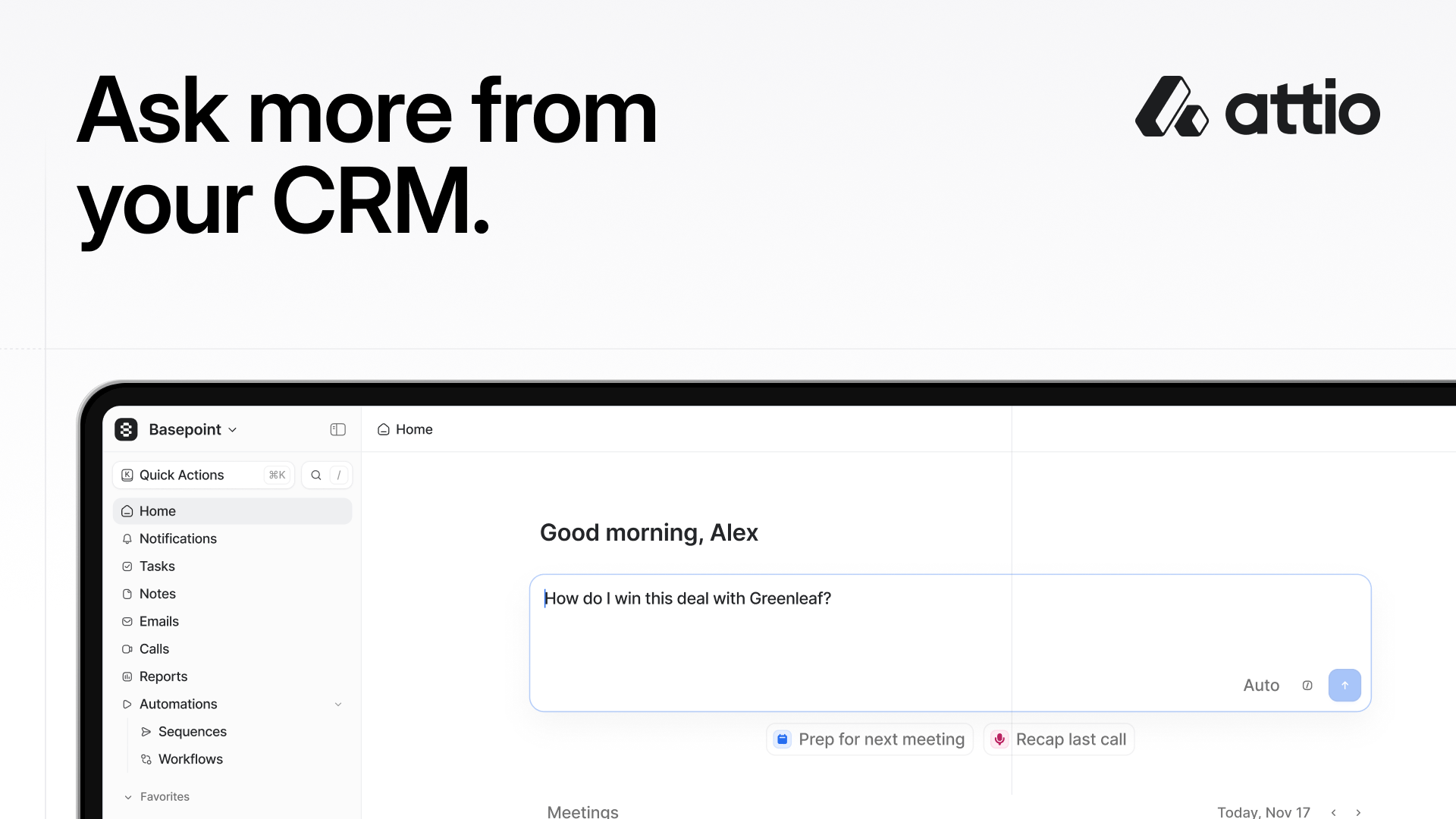
Connect your email, calls, product data and more, and Attio instantly builds your CRM with enriched data and complete context. Whether you’re running product-led growth or enterprise sales, Attio adapts to your unique GTM motion.
Then Ask Attio to plan your next move.
Run deep web research on prospects. Update your pipeline as you work. Find customers and draft outreach emails. Powered by Universal Context, Attio's intelligence layer, Attio searches, updates, and creates across your data to accelerate your workflow.
Ask more from your CRM.
Generalists Beat Specialists Early
Big companies need specialists. SEO experts. PPC experts. Database engineers. Customer success specialists.
You don't.
You need people who can do five things, even if they only do each thing 80% as well as a specialist would. Because at your stage, you have 50 things that need doing and 5 people to do them. Specialization is a luxury you can't afford yet.
The best early-stage hires are people who can:
Code AND talk to customers. Write copy AND analyze data. Sell AND build product. Run ops AND ship marketing. Whatever combination matters for your business.
You're looking for athletes, not specialists. People who can play multiple positions at a high level, even if they're not elite at any single one.
The specialists come later. After you've found product-market fit. After you have processes worth running. After you have resources worth allocating. Right now, you need people who can do whatever the moment requires.
The Mindset That Matters More Than Skills
Skills can be taught. Mindset cannot.
The single most important thing you're hiring for in your first 5 isn't experience or expertise. It's mindset. Specifically, three traits:
Bias toward action. Some people see a problem and want to schedule a meeting. Others see a problem and start fixing it. You need the second kind. Always.
Comfort with ambiguity. Early-stage startups are chaos. The job will change. The strategy will pivot. The priorities will shift. Some people thrive in this. Others need clarity to function. You need the thrivers.
Ownership orientation. When something breaks, ownership-oriented people fix it without being asked. They don't wait for someone to assign them the problem. They see it, claim it, and solve it. Your first 5 should all operate this way.
Hire for these three traits even if it means lower technical skills. You can teach someone to code. You cannot teach them to give a damn.
Where To Actually Find These People
Job boards are not where great early hires come from.
The best people you'll ever hire are usually:
People you've worked with before. They know how you operate. You know how they operate. The trust is already established.
Friends of your team. "Who's the most talented person you've ever worked with?" That's the question to ask everyone you hire. Then go recruit those people.
Active builders in your space. People who are tweeting, blogging, building side projects, or commenting thoughtfully on your industry. They're showing you who they are without you having to interview them.
Underemployed talent. People stuck at big companies who want to do real work. People who left a previous startup that failed. People who took a "safe" job they hate. These people are gold.
The best early hires are usually not actively job searching. You have to find them, build relationships, and convince them to take the leap. This takes longer than posting a job. It also produces dramatically better results.
The Interview Question That Reveals Everything
Forget behavioral interviews. Forget case studies. Forget brain teasers.
Ask this: "What's something you've built or done in the last year that nobody asked you to do?"
This question reveals everything you need to know.
People with bias toward action have a list of things. Side projects, internal initiatives at their last job, problems they solved without permission. They lit up when you ask.
People without it struggle. They give vague answers. They talk about things they were assigned. They can't think of anything specific.
The first kind of person will thrive in your chaos. The second kind will need handholding you can't afford to give.
This question alone has a higher signal-to-noise ratio than most interview processes.
The Bottom Line
Your first 5 hires will determine the next 5 years of your company. Get them wrong and you'll spend years undoing the damage. Get them right and you'll build a foundation that compounds.
So hire slowly. Hire for mindset over experience. Hire generalists over specialists. Find people through your network, not job boards. Ask the questions that reveal who someone actually is, not what their resume says they did.
The bar you set with your first 5 becomes the bar forever. Set it high.
—Brendan Ward
P.S. - If you're about to make your first hire and feeling pressure to move fast, slow down. The wrong hire is more expensive than no hire. Take an extra month. Find the right person. Future you will be grateful.